
The unwounding of the two strands is the starting point. The origin sites are targeted by the initiator proteins which recruit additional proteins that help in the replication process to form a replication complex around the DNA origin.
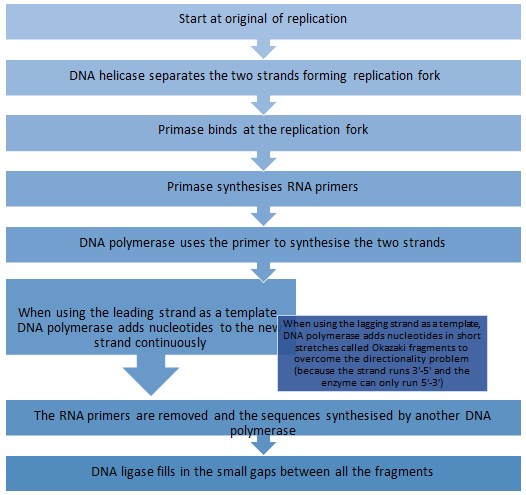
Module 2 3 Dna Replication 2021 Bio018 Biology A Level And Transition To University

Dna Replication Steps Vector Diagram Stock Vector Royalty Free 1382696000
Replication Genetics Britannica
DNA replication is a crucial process.
Dna replication steps. New strands are formed in the 5 to 3 direction. DNA structure and replication review. PCR is an in vitro method of DNA amplification in which thousands to millions of copies of DNA are produced.
Each strand in a parental duplex DNA acts as a template for synthesis of a daughter strand and remains basepaired to the new strand forming a daughter duplex semiconservative mechanism. It forms the replication fork by breaking hydrogen bonds between nucleotide pairs in DNA. Elongation of DNA Replication.
However DNA cant directly order a cell to make proteinsIt has to be transcribed into RNA or ribonucleic acid. Helicase begins to unwind the DNA at the ORIGIN OF REPLICATION a specific DNA nucleotide sequence Its common to only show one strands. For the replication to begin there is a particular region called the origin of replication.
REPLICATION IN ACTION We are now ready to review the steps of DNA replication. Following are the steps followed during the elongation of DNA replication. Steps PCR has three steps.
PCR vs DNA Replication. DNA synthesis is initiated within the template strand at a specific coding region site known as origins. It shows how both strands of the DNA helix are unzipped and copied to produce two identical DNA mole.
Leading and lagging strands in DNA replication. A DNA strand is composed of a long backbone of sugar and phosphate units. The mechanism of replication is identical at each fork.
It is required for DNA replication because the enzymes that catalyze this process DNA polymerases can only add new nucleotides to an existing strand of DNA. In molecular biology DNA replication is the biological process of producing two identical replicas of DNA from one original DNA molecule. Denaturation primer annealing and strand extension.
DNA replication would not occur without enzymes that catalyze various steps in the process. Steps in DNA Replication The process of DNA replication is a complex one and involves a set of proteins and enzymes that collectively assemble nucleotides in the predetermined sequence. RNA in turn is translated by cellular machinery to make amino acids which it joins together to form polypeptides and proteins.
Using your notes book and this assignment place the steps of DNA replication in the correct order. This is carried out by an enzyme called helicase which breaks the hydrogen bonds holding the complementary bases of DNA together A with T C with G. DNA replication occurs in all living organisms acting as the most essential part for biological inheritanceThis is essential for cell division during growth and repair of damaged tissues while it also ensures that each of the new cells receives its own.
Replication begins at a sequence called an origin. As we all know DNA is the genetic code that helps our cells to develop and reproduce in a planned way. DNA or deoxyribonucleic acid is the molecule that codes genetic information.
Molecular mechanism of DNA replication. In response to the molecular cues received during cell division these molecules initiate DNA replication and synthesize two new strands using the existing strands as templates. DNA replication also known as semi-conservative replication is the process by which DNA is doubledThis is an important process taking place within the dividing cell.
DNA replication is a process that occurs during cellular division where two identical molecules of DNA are created from a single molecule of DNA. This is the stage where DNA replication is initiated. 1The first major step for the DNA Replication to take place is the breaking of hydrogen bonds between bases of the two antiparallel strands.
This is the currently selected item. DNA Replication is a natural process that produces two identical copies of DNA from one DNA molecule. DNA replication demands a high degree of accuracy because even a minute mistake would result in mutations.
Because the double helix is anti-parallel and DNA. 12 The mechanism of DNA replication prokaryotic DNA. Steps of DNA Replication The next we have to do is to shed light into the mystery of the steps of DNA Replicationof the Eykaryotes.
Major steps involved in DNA replication are as follows. DNA fingerprinting involves a number of intensive and important steps in order to fully complete and develop and DNA fingerprint of a father a suspect or a person involved in an immigration problem. Before we jump into the process of replication let us take a quick look at the structure of DNA.
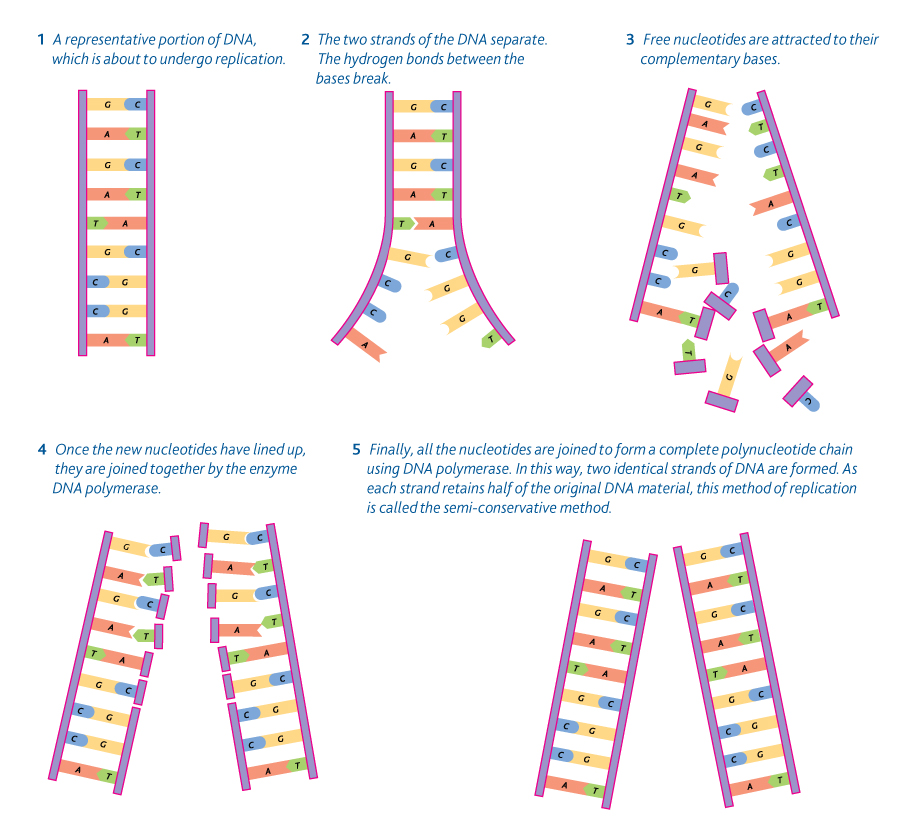
3Free nucleotides are attracted to exposed bases on the loose strands of DNA. DNA Replication-Steps Identification of the origins of replication Unwinding denaturation of dsDNA to provide an ssDNA template Formation of the replication fork Initiation of DNA synthesis and elongation Primer removal and ligation of the newly synthesized DNA segments Reconstitution of chromatin structure. Because of which it is called the Blueprint of Life.
Enzymes that participate in the eukaryotic DNA replication process include. The DNA double helix breaks or unzips down the middle between the base pairs. The enzyme DNA polymerase moves along the exposed strands and adds complementary nucleotides to each nucleotide in each existing strand.
Thus replication cannot initiate randomly at any point in DNA. This 3D animation shows you how DNA is copied in a cell. Speed and precision of DNA replication.
The separation of the two single strands of DNA creates a Y shape called a replication fork. 2 Strands of DNA separate. The process begins when the helicase enzyme unwinds the double helix to expose two single DNA strands and create two replication forks.
In this article we shall discuss the structure of DNA the precise steps involved in replicating DNA initiation elongation and termination and the clinical consequences that can occur when this process goes wrong. DNA helicase - unwinds and separates double stranded DNA as it moves along the DNA. The three steps in the process of DNA replication are initiation elongation and termination.
Number the steps below in order to describe the replication of DNA in a cell. The process of DNA fingerprinting starts with isolating DNA from any part of the body such as blood semen vaginal fluids hair roots teeth bones etc. 4Hydrogen bonds between nucleotides form.
Ða set of proteins and enzymes Ðand requires energy in the form of ATP. What is the purpose of DNA replication. Therefore to ensure that mistakes or mutations are not introduced the cell proofreads the newly synthesized DNA.
1Hydrogen bonds between nucleotides break. As a semiconservative process a single molecule containing two strands of DNA in double helix formation is separated where each strand serves as a template for the new DNA molecules. The mechanism of DNA replication Tightly controlled process Ðoccurs at specific times during the cell cycle.
One of our different nucleotide bases -- A T C or G -- hang off each sugar unit. Deoxyribonucleotides occur freely inside the nucleoplasm in the form of monophosphatesSo they are first phosphorylated and changed to active forms of triphosphates with the help of the enzyme phosphorylase along with the energy. The first step in DNA replication is to unzip the double helix structure of the DNA molecule.
Helicase enzyme breaks hydrogen bonds between bases unzips and unwinds the helix A protein that catalyzes chemical reactions. The sequence of the bases encodes genetic information. Following are the important steps involved in DNA replication.
DNA replication in 7 easy steps. DNA Replication StepsStages Initiation. DNA replication takes place simultaneously at each fork.

Dna Replication Process
Dna And Dna Replication Notes Biology Mrs Mccomas


Dna Replication Steps Critical Faqs
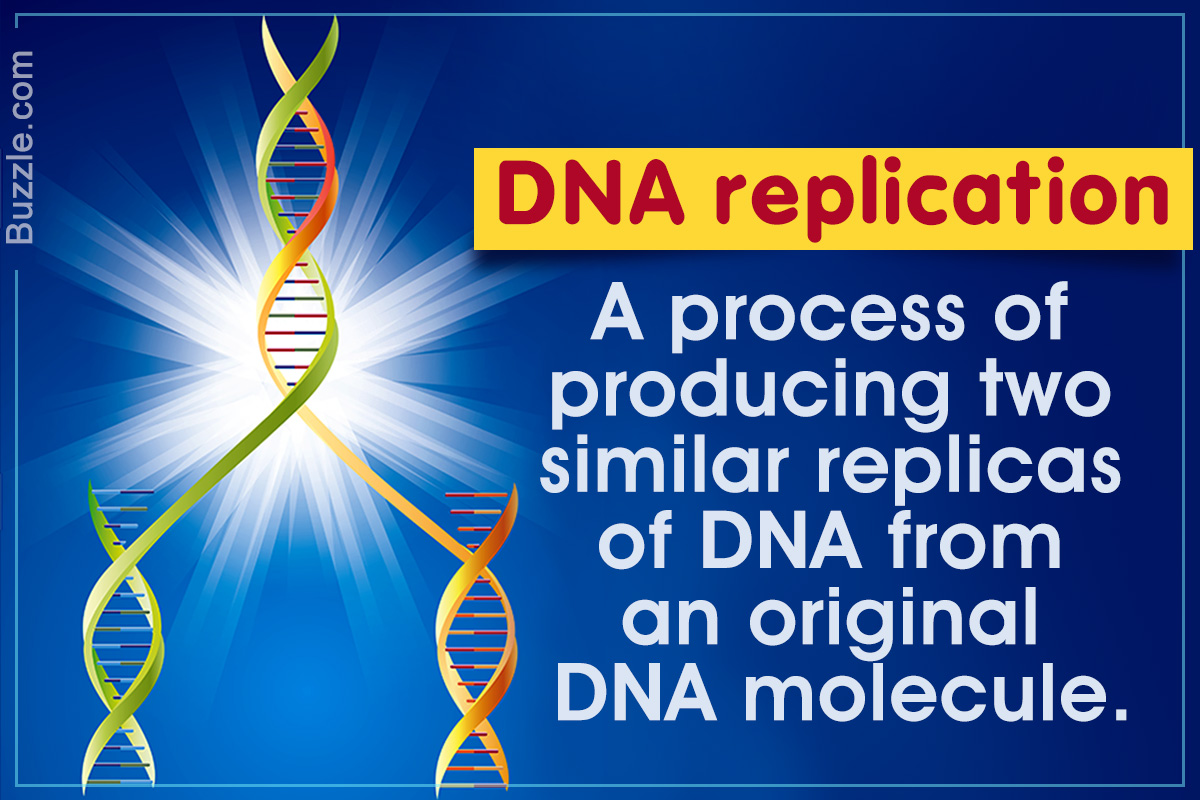
An In Depth Look At The 7 Major Steps Of Dna Replication Biology Wise
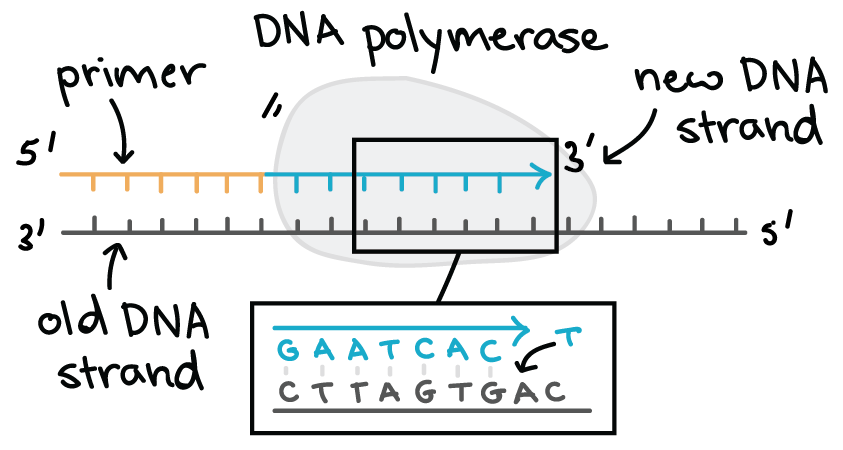
Molecular Mechanism Of Dna Replication Article Khan Academy
What Does Dna Replication Result In Socratic
Dna Replication Bioninja

/DNA_replication_elongation2-e38fc92e8ad74586bfe0443d7490d3ce.jpg)
Dna Replication Steps And Process


